
Carhartt: A Workwear Deep Dive Built on Torture Tests
The USA-made core is still measurably buy-it-for-life. The offshore catalog is good, not legendary. Here's how to tell them apart.
7 min read
Carhartt is the most independently stress-tested workwear brand in menswear, and the data says two things at once: the made-in-USA core is still genuinely buy-it-for-life, and the brand has quietly traded some of that for offshore production and modern fit. Both are true. The skill is knowing which Carhartt is which — because the gap between a B01 work pant tested at 327 pounds of leg-tear strength and a fashion-line Carhartt WIP jacket at $275 is enormous, and they share a logo.
The torture-test pants are the real Carhartt
Start where the evidence is hardest. Carl Murawski's Ultimate Work Pants Torture Test put the B01 Firm Duck Double-Front (12 oz cotton duck, made in USA, ~$60) through measured destruction: highest leg-tear strength in the test at 327.4 lbs, best belt-loop pull strength at 77.7 lbs, puncture resistance at 45.2 lbs, double-knee puncture at 73.7 lbs, and "100% cotton burns rather than melts." His verdict: "best overall durability and value… American-made classic that consistently outperformed competitors." Separately he called the BO1 pant "the strongest pants I have ever tested." This is the Carhartt that earned the reputation — heavy, USA-made, measurably tougher than anything near its price.
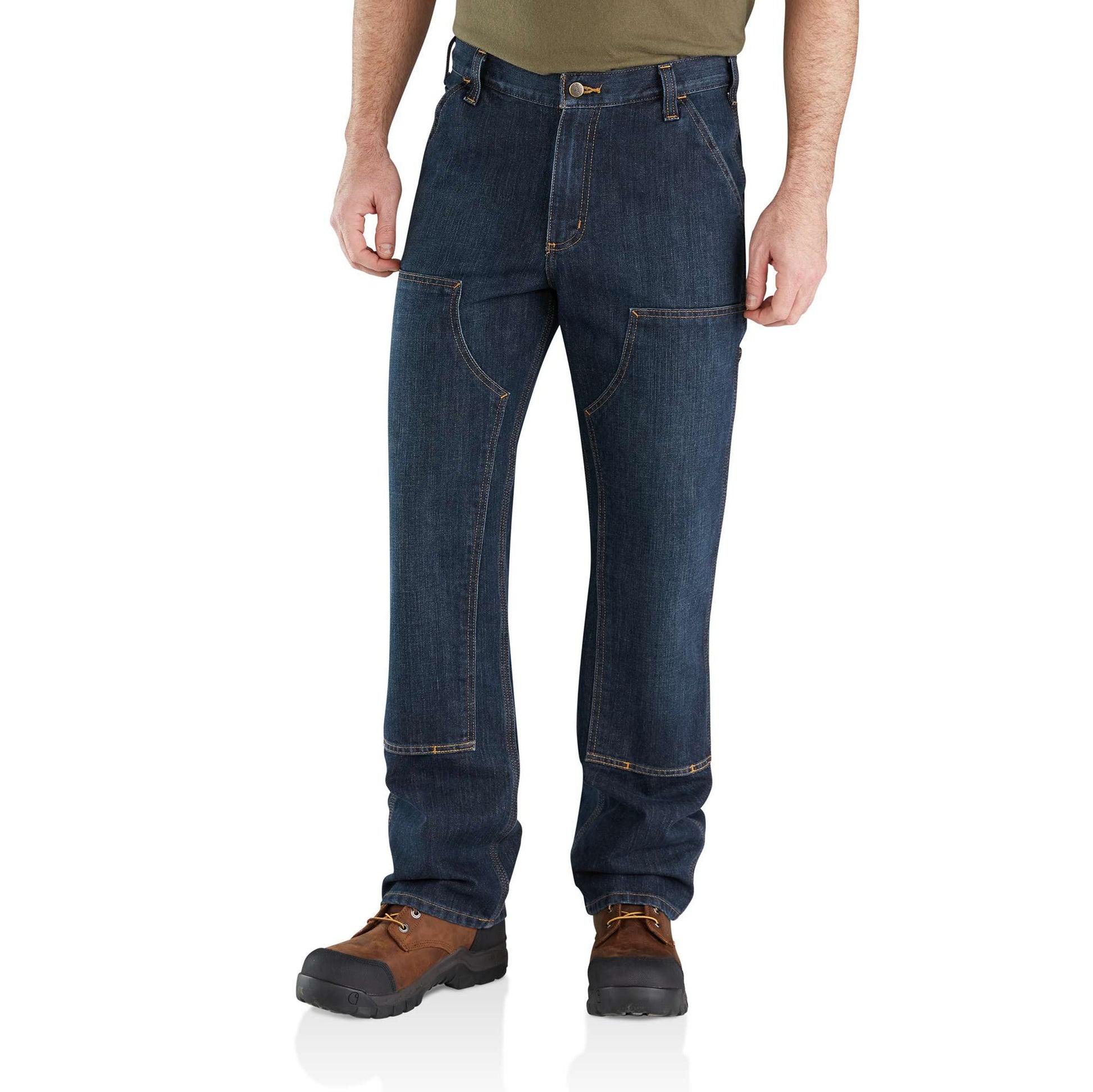
The Double-Knee jeans tell the same story. Harry Has, testing the internet's favorite affordable jeans, scored them 5/5: "the best quality and longest-lasting jeans on the list… extremely durable, holds shape well." Murawski's spec read: 15 oz, 100% cotton, triple-stitched, double-knee reinforcement, made in USA, under $100. The honest cons are real — "heavy weight pulls them down, requires a belt; too heavy for summer; runs big, size down" — but as a durability instrument the data is unambiguous.
The Detroit Jacket: icon, with an honest asterisk
The Detroit Jacket (introduced 1954) is the brand's signature, and Murawski's history of it is the most useful single account. The vintage J97 — 12 oz firm-hand duck, Troy Mills blanket lining — "held up exceptionally well through decades of heavy use," which is why clean originals now sell for $200+ secondhand. The modernized version (made in Mexico, ~$90–100) is a real improvement in some ways: "narrower sleeves, softer lining, longer drop-tail hem, shoulder gussets." But he doesn't hide the loss: "elimination of the iconic Detroit cuff… lost some of the original charm and silhouette." If you want the Detroit feeling, the data says buy a used J97. If you want a functional modern work jacket, the new one is good and cheap.
The rest of the outerwear, by the numbers
| Piece | Price | Independent verdict |
|---|---|---|
| Chore Coat | ~$90 | "Classic, affordable, better tier" |
| Super Dux Gore-Tex | ~$300 | "Gore-Tex at ~1/3 of Arc'teryx" |
| Yukon Extremes Parka | ~$300 | "Most impressive Carhartt item reviewed" |
| J130 Washed Duck Jac | ~$120 | "Abrasion concerning, no water resistance" |
The Super Dux Gore-Tex shell is the standout value: fully taped seams, 3.7 oz packable, "justifies its price for serious workwear use… much more affordable than Arc'teryx." The Yukon Extremes parka (390g of 700-fill featherless down, 500-denier Cordura, DWR) Murawski called the best Carhartt item he'd tested, "excellent value compared to competitors at $300." The J130 is the cautionary entry — "well-sorted and warm but abrasion resistance was concerning and it performed poorly in the water-penetration test." Carhartt is not uniformly excellent; the data lets you skip the weak pieces.
The everyday tee and the offshore reality
The K87 heavyweight tee (6.75 oz, ~$16–25) is the workhorse: The Iron Snail scored it 4/5 — "loose comfortable fit, work-ready durability" — with the honest knock that it's "rougher hand feel, not ring-spun cotton." Murawski's value framing: "inexpensive at $16, often on sale, proven durability lasting decades." It's a great work tee and a mediocre fashion tee; buy it for the former.
The uncomfortable thread through the modern catalog is country of origin. The pieces reviewers rate highest for durability — the B01 pants, the Double-Knee jeans — are explicitly made in USA. Much of the rest is now Mexico, Nicaragua or Guatemala. The K87 tee is Guatemala; the modern Detroit is Mexico; the J130 is Nicaragua. alpha m. put the cultural critique bluntly: Carhartt is "formerly synonymous with quality workwear but now declining in quality while hype increases through influencer endorsements." That overstates it — the USA core is still measurably excellent — but the pattern is real: the brand's best stuff is its American-made stuff, and not everything wearing the label is that.
Carhartt vs Carhartt WIP — not the same company
One clarification that saves money: Carhartt WIP (Work In Progress) is a licensed European streetwear sub-brand, not mainline Carhartt. Murawski on the WIP Detroit Jacket: "European streetwear-focused take… prioritizes style over workwear functionality… expensive premium pricing ($275) for fashion over function, no back gussets, not truly workwear despite Carhartt branding." Austin Vo's WIP cargo-pant testing found genuinely good pieces (the Columbia Ripstop Regular Cargo, ~$145, "ages beautifully") but also duds (the Cole Cargo at $158, "boring, poor value"). If you want workwear, buy mainline Carhartt. If you want fashion cargos, WIP is a different — pricier — proposition, judged on different terms.
The bib, overall and flannel range
Carhartt's bibs and overalls are a category most style buyers ignore and tradespeople swear by, and Murawski's Best Carhartt Bib Overalls testing maps it cleanly by job and budget. The Loose Fit Denim Active bib (~$69) is the entry point — "simple, affordable, effective… triple-stitched main seams." The Rugged Flex Duck Chore bib (~$89, 8 oz canvas, 98% cotton / 2% spandex) is the warm-weather pick — "lightweight, double knees, articulated fit." The Yukon Extremes insulated biberalls (~$200, 500-denier Cordura, 150g 3M Thinsulate) are "the warmest bibs Carhartt makes… DWR finish makes snow and ice fall off," with the honest con of being the priciest. There's a clear ladder here, all of it independently walked.
The flannel and work-shirt line follows the same logic: the Rugged Flex Midweight Flannel (~$50, 97/3 cotton-spandex, triple-stitched) is "solid workwear value with good stretch"; the Heavyweight Flannel (~$45) is "excellent value… heft, pen pocket, triple-stitch seams"; the Force Long Sleeve (~$49.99, 71% polyester / 29% nylon chambray) is "simple, lightweight, great value… unaffected by abrasion testing." The recurring cons are consistent and worth internalizing before you buy: Carhartt runs oversized, the branding is bold, and the colors are workwear-plain. None of that matters on a job site; all of it matters if you're buying Carhartt as fashion, which is exactly the tension alpha m. was pointing at.
Rugged Flex vs classic: who the modern jeans are for
The most important modern Carhartt decision is Rugged Flex vs the classic heavy denim, and Murawski's NEW Carhartt Rugged Flex Jeans: Who They're Actually For draws the line precisely. The classic Double-Knee (15 oz, 100% cotton, triple-stitched, USA, under $100) is "the ultimate durability option for heavy-duty work… recommended for those prioritizing toughness over comfort," with a real break-in. The Rugged Flex line (12 oz, 70% cotton / 29% polyester / 1% spandex, flat-felled seams) is "modern, comfortable… better positioned as everyday wear rather than demanding workwear," explicitly trading durability for fit and stretch — "removed triple stitching on the outseam, less durable than older 100% cotton models." Neither is wrong; they're different tools. If you actually work hard in your pants, the 15 oz classic. If you want Carhartt looks with everyday comfort, Rugged Flex — just don't expect it to survive what the classic survives.
How to buy Carhartt well
- Maximum durability per dollar: B01 Firm Duck pants (~$60, USA) — the torture-test champion.
- One do-everything work jacket: Modern Detroit or chore coat (~$90–100). Want the vintage soul? Buy a used J97.
- Foul-weather shell: Super Dux Gore-Tex (~$300) — Arc'teryx-tier protection at a third the price.
- Deep cold: Yukon Extremes parka (~$300) — the best-reviewed item in the catalog.
- Work tee: K87 (~$16–25) — buy several on sale; it's a work tool, not a fashion piece.
- Skip: the J130 jac (abrasion/water failures) and don't confuse Carhartt WIP fashion pricing with mainline value.
The verdict
There's also a resale dimension the data keeps surfacing: Harry Has noted the Double-Knee jeans "can be found cheaper secondhand," and clean vintage J97s sell for $200+ — Carhartt holds value because it lasts, which quietly improves the cost-per-wear math on the USA-made core and lets you buy the legendary vintage cut used rather than settle for the modern one.
Carhartt earns its reputation on measured evidence, not nostalgia — the USA-made B01 pants and Double-Knee jeans are independently the toughest things at their prices, and the Super Dux and Yukon Extremes are standout outerwear values. The honest caveats are equally well documented: modern production is largely offshore, the modern Detroit lost the charm of the vintage J97, a few pieces (J130) underperform, and Carhartt WIP is a separate, pricier fashion line. Buy the American-made core for genuine buy-it-for-life value, treat the offshore pieces as good-not-legendary, and you'll get exactly what the reviewers got: workwear that does the job at a price almost nothing else matches.
Daft Pulp may earn a commission from purchases made through links on this site, at no extra cost to you.