
Best Jeans for Men: Expert-Ranked, $45 to $300
The $60 Levi's everyone validates, the sub-$100 Carhartt that won the torture test, and why $300 selvedge is a hobby.
7 min read
The most-tested jean in this data is a $60 Levi's, and the most durable one is a sub-$100 Carhartt that a reviewer ranked best after physically trying to destroy the competition. There is no $300 selvedge jean in here that independent reviewers say outperforms either by the difference in price. That's the whole story of denim: the value ceiling is low, the fit decides everything, and Japanese selvedge is a hobby, not an upgrade.
The picks at a glance
| Tier | Pick | Price | The case |
|---|---|---|---|
| Best value classic | Levi's 501 STF | ~$60–80 | "Best raw denim under $100" |
| Best durability | Carhartt Double Knee | <$100 | "Best quality, longest lasting" |
| Best value selvedge | Uniqlo Selvedge | ~$47 | "Feels tailor-made" |
| Connoisseur selvedge | Oni Denim 595 | $300+ | "Craziest texture" — diminishing returns |
| Best toughest work jean | Carhartt Utility | ~$45 | Won most torture tests |
1. Best value classic: Levi's 501 Shrink-to-Fit (~$60–80)
The default answer, and three independent reviewers agree. Gentleman's Gazette: "worth it for those with a classic style… strong, sturdy 100% cotton denim, shorter break-in than selvedge, accessible under $100." Alejandro Jomar, reviewing raw denim under $100, called the STF "a timeless American classic that fades beautifully despite being non-selvedge… exceptional value at $80, an excellent entry point for raw denim." The Iron Snail scored it 4/5: "iconic shrink-to-fit, great dark indigo." The universal caveat: shrink-to-fit "requires going about two sizes up" — get the sizing right and this is the most validated jean at any price. The honest knocks are real too: non-selvedge, and modern production in Sri Lanka/Vietnam/Indonesia is "lower quality than vintage."
2. Best durability: Carhartt Double Knee (under $100)
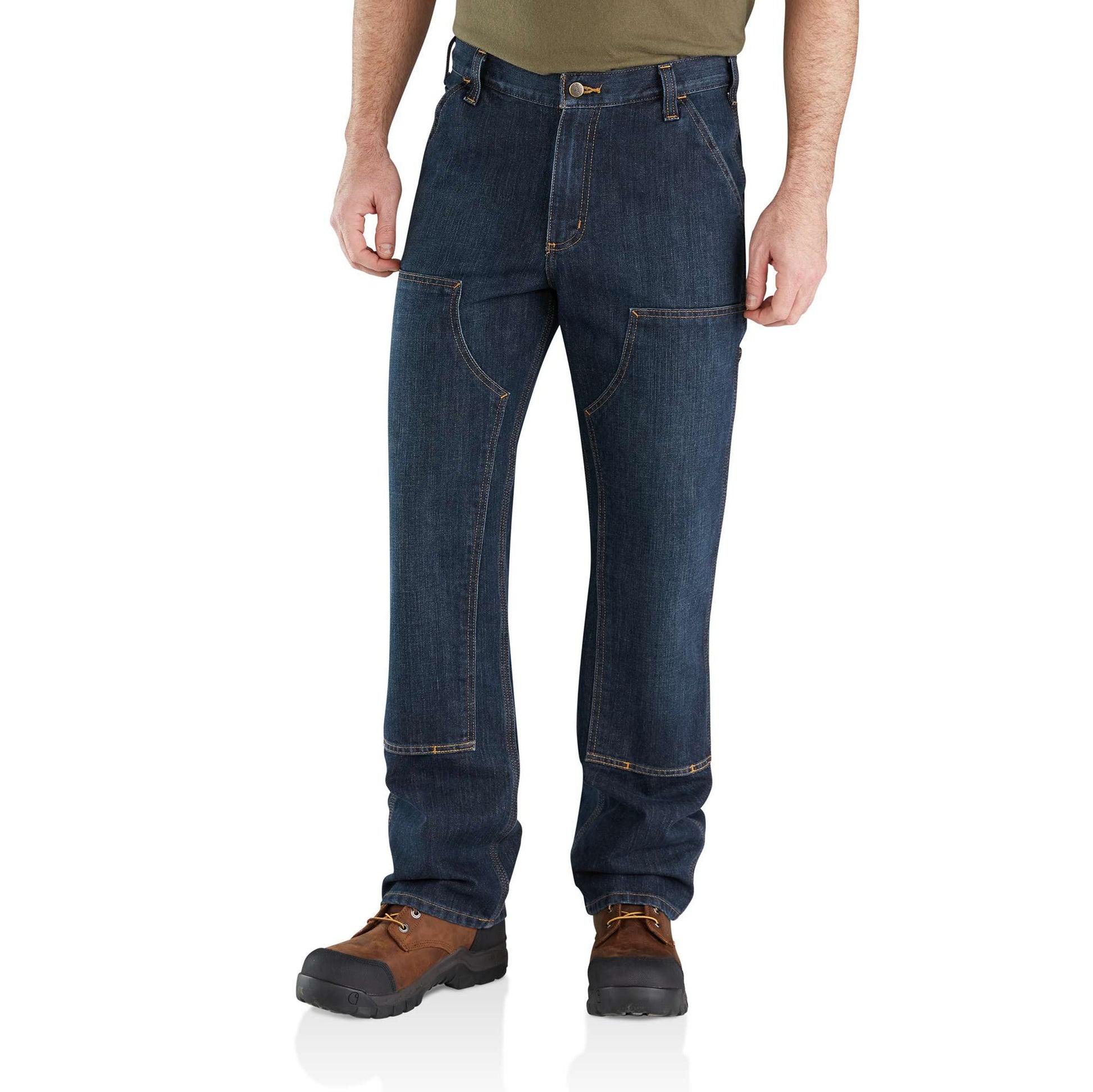
If the jean needs to survive abuse, this is the documented winner. Harry Has tested the internet's favorite affordable jeans and scored the Carhartt Double Knee 5/5: "the best quality and longest-lasting on the list, extremely durable, holds shape well, worth every penny." Carl Murawski's spec: 15 oz, 100% cotton, triple-stitched inseam and outseam, double-knee reinforcement, made in USA, under $100. The honest cons are consistent across reviewers: "heavy weight pulls them down, requires a belt; too heavy for summer; runs big, size down; double-knee patches make them casual-only." This is a cool-weather, casual, near-indestructible jean — not a year-round dress-down trouser.
3. Best toughest work jean: Carhartt Utility (~$45)
When the question is purely durability under work conditions, Murawski's Who Makes the TOUGHEST Work Jeans torture test is the authority. Carhartt's Utility Jean "won most tests with four victories… double-lined back pockets prevent tool wear-through, belt loops sewn beneath the waistband, flat-felled seams," scoring 4/5 with a recommend. The budget alternatives lost on the bench: Big Bill at $29 (2/5, "no hammer loop, made in Bangladesh"), Key Apparel at $33 (2/5, "weakest belt loop at 22.5 lbs"), and even Patagonia's $125 Work Denim (3/5, "very expensive, not pure cotton, average durability for the price"). The lesson: the toughest work jean is mid-priced and American, and paying $125 for Patagonia buys eco-materials, not more toughness.
4. Best value selvedge: Uniqlo Selvedge (~$47)
If you want selvedge without the hobby, James Leung's verdict is the one to trust — he scored the Uniqlo selvedge 4/5: "exceptional fit and value, feels tailor-made with a perfect rise and comfortable straight leg despite being 100% cotton… excellent value at £35–40." One Dapper Street separately praised a Uniqlo raw selvedge for "stretch unusual in raw denim, softer off the bat, free hemming." It's the rare selvedge that's a value play rather than a connoisseur indulgence; the only catch the reviewers note is that the best Uniqlo denim sells out fast.
5. The connoisseur tier: Japanese selvedge ($300+)
This is where you stop buying jeans and start buying fabric. The Iron Snail scored the Oni Denim 595 'Kasuri' 5/5 — "some of the craziest textured denim in the world, wild fabric that fades with tremendous character" — and Levi's own LVC 1954 reproduction ($300, Turkey, selvedge, sanforized) is the heritage-accurate option. These are genuine craftsmanship and genuine diminishing returns. Nothing in the independent record claims a $300 Japanese selvedge outperforms a correctly-sized $80 Levi's STF in daily use; it fades with more character, which is a hobbyist's reward, not a functional one. Buy one if you love denim as a craft. Don't buy one expecting it to be "better jeans."
The fit truth that outranks brand
The single most important point in the data isn't a product — it's that fit beats brand. The Iron Snail's Why Your Denim Jeans Look Bad On You uses Levi's 501s to show the same jean looking great or terrible depending on cut and era sizing. Harry Has scored the wide 90s-style Levi's 565 a 1/5 — "drape horribly, make legs look shorter and stockier, look sloppy" — not because Levi's is bad, but because the silhouette was wrong for him. Wrangler's Cowboy Cut earned a 4/5 with the same caveat: "can look incredible on the right person… runs small, slim fit not for everyone." Before you spend, the reviewers are unanimous in spirit: a correctly-cut $60 jean beats a wrongly-cut $300 one every time.
Selvedge vs non-selvedge: what it actually means
A lot of denim spending is driven by a misunderstanding the data quietly corrects. Selvedge ("self-edge") refers to denim woven on old shuttle looms that finish the fabric edge cleanly — it's a marker of traditional construction, not automatically better jeans. The evidence makes the point: Alejandro Jomar called the non-selvedge Levi's 501 STF one that "fades beautifully despite being non-selvedge," and Gentleman's Gazette rates it "worth it" while noting non-selvedge is "lower quality than premium options" — both true, and the gap is smaller than the price gap implies. Uniqlo proves selvedge can be cheap (~$47, James Leung's "tailor-made" 4/5), while Oni 595 and Levi's LVC 1954 ($300, sanforized, Turkey) show what the top of the market charges for character fading. The honest framing: selvedge buys you tradition and a more interesting fade, not durability or fit superiority. A non-selvedge 501 that fits beats a selvedge jean that doesn't, every time.
The work-jean bench, in numbers
For jeans that have to survive work, Murawski's torture test gives hard numbers worth citing. Carhartt's Utility Jean "won most tests with four victories," with "double-lined back pockets that prevent tool wear-through" and "belt loops sewn beneath the waistband." The losers failed on specifics, not vibes: Big Bill ($29) "has no hammer loop, which is unusual for carpenter jeans" and is "made in Bangladesh"; Key Apparel ($33) posted "the weakest belt-loop performance at 22.5 lbs"; Patagonia's Work Denim ($125) had "the cleanest internal stitching" but is "not 100% cotton" and delivered only "average durability for the price." The pattern across the bench is unambiguous: the toughest work jean is the mid-priced American one, and spending up mostly buys eco-materials or finishing, not survival.
What to skip or filter
- Excessive distressed washes: The Style Consultant's note on Replay applies broadly — "avoid excessive wild washes and distressed options; focus on classic items."
- Anything bought without sizing research: STF needs ~2 sizes up; Carhartt runs big; Wrangler runs small; Levi's sizing varies by era. More denim is ruined by sizing than by brand choice.
- Premium price as a durability proxy: the $125 Patagonia lost the torture test to a $45 Carhartt. Price does not predict toughness in denim.
Break-in and care, the deciding practicalities
Two practical points the reviewers stress separate a great jean from a ruined one. First, shrink-to-fit demands discipline: Levi's own guidance is to size up roughly two inches and wash sparingly — Gentleman's Gazette and Alejandro Jomar both flag that getting the STF sizing wrong is the most common way buyers wreck an otherwise excellent $80 jean. Second, raw and heavyweight denim (the Levi's STF, the 15 oz Carhartt) needs a real break-in and benefits from infrequent washing to develop the fades that justify buying raw in the first place; the Carhartt's "stiffer, less flexible initially" note from Murawski is the price of its durability. None of this applies to pre-washed mid-wash jeans — but if you're buying the validated picks here, most are raw or heavyweight, and the care discipline is part of the deal. Skip it and even the best jean on this list disappoints.
The verdict
Buy a correctly-sized Levi's 501 (Shrink-to-Fit if you want the project, regular if you don't) for ~$60–80 and most men are done — it's the most independently validated jean at any price. Need it bulletproof? The Carhartt Double Knee under $100 for casual wear, or the ~$45 Carhartt Utility if it's genuinely workwear. Want selvedge that's still a value? Uniqlo at ~$47. Japanese selvedge above $300 is a craft purchase, not a performance one, and the reviewers say so plainly. The decisive variable in every video isn't the brand on the patch — it's whether the cut fits your body. Solve that first, spend modestly, and the data says you'll out-dress people in jeans costing five times more.
Daft Pulp may earn a commission from purchases made through links on this site, at no extra cost to you.